ESPN, Streaming & Ad Monetization
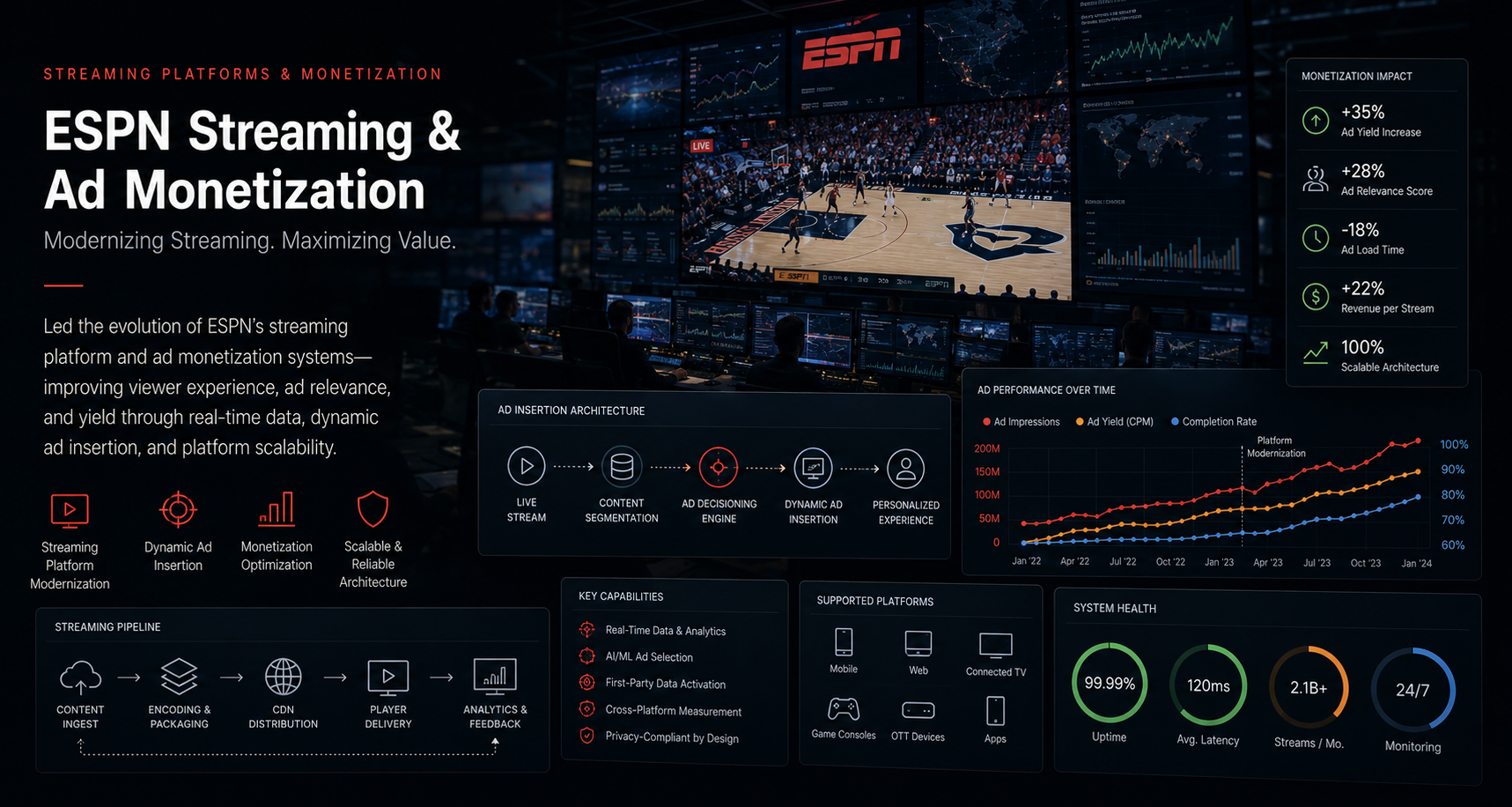
Moved ESPN from Flash to HTML5, readied the streaming platform for 4K and made the case for moving from FreeWheel to Google Ad Manager.
Outcome
Engagement up 25%, ad-insertion success up 60%.
The Challenge
By 2017, ESPN’s Flash players for live and on-demand streams were nearing end of life. Viewers wanted 4K and reliable playback; ad insertion failures were costing revenue. The work had two parts: replace Flash and fix the ad pipeline.
Key Decisions
Lead with the player migration
I evaluated HTML5 player frameworks against ESPN’s live-sports needs: adaptive-bitrate performance under concurrent load and ad-pod integration. I chose the player on those measures, then revisited buffering and ad handling instead of carrying the Flash behavior forward.
Make the new pipeline 4K-ready
I included 4K support in the video pipeline and player migration rather than budgeting for a second rebuild later.
Test FreeWheel against Google Ad Manager
I ran controlled A/B tests on ad-insertion success, fill rates and latency. Google Ad Manager performed better on each measure, and the results persuaded Disney leadership to make the broader switch.
Train the NOC team and automate QA
I trained NOC staff in product discovery so they could diagnose streaming issues, and introduced QA automation to reduce manual testing and catch regressions before release.
What I Delivered
HTML5 live-streaming player
Replaced ESPN’s legacy Flash player for live sports.
4K-ready architecture
Updated the video pipeline and player to support 4K without a second migration.
Ad tech migration to GAM
Built the business case and migration plan for moving ESPN from FreeWheel to Google Ad Manager.
QA automation framework
Reduced manual testing and caught regressions before they reached viewers.
Outcomes
After the HTML5 migration, video engagement rose 25% and ad-insertion success increased 60%, turning more failed ad pods into delivered impressions.
Disney adopted Google Ad Manager beyond ESPN. NOC training and QA automation also reduced incident-response time and freed engineering capacity from manual testing and triage.